Our Services
Dental Implants in North Hollywood, Los Angeles
Dental implants are the most complete way to replace a missing tooth, because they restore the root as well as the crown. Missing teeth affect how you eat, speak and smile, and the bone under a gap slowly shrinks over time. At NOHO Dental Group in North Hollywood, your implants are planned and placed by Dr. Bijan Afar, a board-certified periodontist and implant specialist, and restored in the same office.

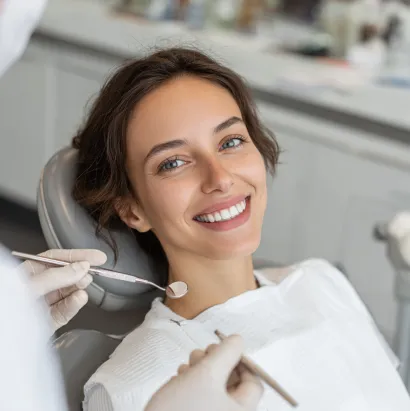
Watch
See Dental Implants at NOHO Dental Group
Video hosted on YouTube. Captions can be enabled in the player.
What is a dental implant?
A dental implant is a small titanium screw placed in your jawbone, where it acts as an artificial tooth root. Over several months the post fuses with the bone. A small connector called an abutment is then attached to the post, and a prosthesis (a crown, bridge or denture) is fixed on top. Crowns are made to match the shape, size and color of your natural teeth, so the replacement teeth look and feel like your own smile.
Benefits and risks
- Long-lasting. With good care, the implant post is designed to last for decades.
- Natural look and feel. The crown blends in with your other teeth.
- Protects your jawbone. The implant stimulates the bone, which helps prevent the shrinking that follows tooth loss.
- Leaves neighboring teeth alone. The teeth next to the gap do not need to be shaped to hold anything.
- Normal eating and speaking. An implant stays in place, so you can chew most foods with confidence.
Like any oral surgery, implant treatment has risks. The most common are swelling, minor bleeding and soreness for a few days. Less often, an implant can become infected, fail to fuse with the bone, or press on a nerve and cause numbness or tingling in the lip, chin or gums. In the upper jaw, an implant placed too close to the sinus can cause problems. Careful planning with X-rays lowers these risks, and your dentist will go over the ones that apply to you before the procedure.
Over the long term, the gum and bone around an implant can become inflamed if plaque builds up, even though the implant itself cannot get a cavity. Brush twice a day, floss daily and keep your regular cleanings so our hygienists can check the tissue around each implant. Our article on caring for your implants has more tips.
Types of implants and other tooth replacement options
| Option | What it replaces | Good for |
|---|---|---|
| Single-tooth implant | One missing tooth | A gap with healthy teeth on both sides |
| Implant-supported bridge | Several teeth in a row | Replacing multiple teeth with fewer implants |
| Full-arch implants | All teeth in the upper or lower jaw | Patients with no teeth or failing teeth |
| Implant-supported denture | A full or partial denture | Dentures that need a more stable fit |
Most implants placed today are endosteal implants: screw-shaped posts set directly into the jawbone. They are usually made of titanium, a metal the body accepts well, and some patients ask about one-piece zirconia (ceramic) implants instead. Mini implants are narrower posts that are sometimes used to steady a lower full denture. Subperiosteal implants, which sit on top of the bone under the gum tissue, are rarely used now because bone grafting usually makes a standard implant possible. At your consultation Dr. Afar explains which type and material suits your bone and your bite, and why.
Implants are not the only way to replace a tooth. A traditional fixed bridge is anchored to the teeth on either side, and a removable denture rests on the gums. Implants are the only option that replaces the root, which is why they help keep the jawbone in place. Compare the options in our guide to implants vs. bridges, on our dentures page, and in what happens when you wait.
About your dentist
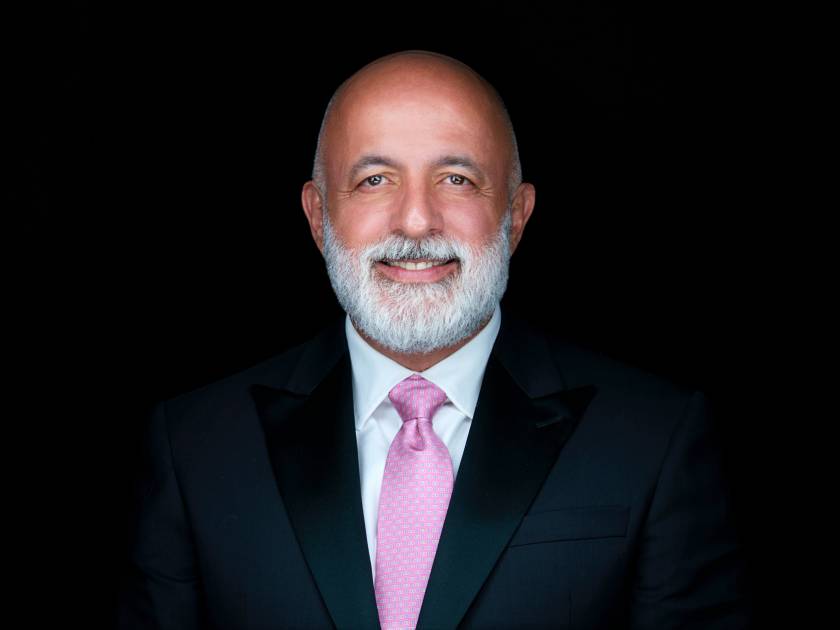
Bijan Afar, DDS, MS
Founder & Periodontist / Implant Specialist
Dr. Bijan Afar is the founder of NOHO Dental Group and a board-certified periodontist who has served the North Hollywood community for nearly three decades. He earned his DDS and a Master of Science in Oral Biology from the UCLA School of Dentistry, followed by a postgraduate research fellowship at the National Institutes of Health (NIH). Dr. Afar specializes in periodontics and dental implantology, guiding complex restorative and full-mouth reconstruction cases from surgical placement through final restoration. His approach combines evidence-based technique with a patient-first philosophy — every treatment plan starts with listening. Dr. Afar leads a multi-specialty team so that patients can complete their entire treatment plan in a single, familiar practice.
Read full bioVisit Us
Implants care in North Hollywood
Dental implant surgery and recovery
Most healthy adults with healthy gums and enough bone are good candidates. If you have lost bone, a graft can often rebuild it. Smoking, uncontrolled diabetes and untreated gum disease can affect healing, so we review your health history and treat gum problems first when needed. Read more in Am I a candidate?
- Consultation and imaging. We examine your teeth, gums and jawbone, take X-rays, review your medical history and medications, and confirm that the procedure is right for you.
- Preparation. If you need an extraction or a bone graft first, we plan it and let it heal.
- Implant placement. The implant is placed in your jawbone under local anesthesia, so the procedure itself should not be painful; you may feel pressure. Ask us about sedation options if you feel anxious. Patients who need general anesthesia are referred to an oral and maxillofacial surgeon.
- Healing. Over about 3 to 9 months the implant fuses with the bone, a process called osseointegration.
- Abutment and crown. Once healed, the abutment and your custom crown are attached. You can eat, brush and floss as normal.
The first days after the procedure. Mild swelling, some bleeding and soreness are normal for two or three days. Most patients manage the pain with over-the-counter medication, cold packs and soft food, and chew on the other side of the mouth for a while. Call us if pain gets worse instead of better, if swelling grows after the third day, or if you notice symptoms of infection such as a bad taste or fever.
Implant cost and financing
The cost depends on how many teeth you are replacing, whether you need a bone graft or extraction, the type of restoration and any sedation. A full-mouth or full-arch treatment costs considerably more than a single tooth, because it involves several implants and a larger prosthesis. After your exam, we provide a written estimate before you decide. Some dental insurance plans cover part of the treatment, often the crown or the extraction more than the implant itself, and we offer CareCredit financing.
Questions & topics
Frequently asked questions
Book your visit
Request your Implants appointment
Ready to replace your missing teeth? Request an implant consultation or call (747) 339-7016.
Fill in the form and our team will call to confirm a time that works for you. Most new patients are seen within 1–3 days.
- Insurance friendly, we accept most major plans
- Same-week emergency slots available
- Multi specialty team in one location
Keep reading
Helpful articles about dental implants
Best ways to care for your dental implants
How to care for dental implants: daily cleaning, flossing, checkups and the warning signs of gum problems around an implant. A North Hollywood guide.
Read the articleHow Long Is the Recovery for Dental Implants? 5 Facts to Know Before Restoring Your Smile
Deciding to replace missing teeth with dental implants is one of the most rewarding investments you can make for your health, confidence, and long-term…
Read the articleDental Bridge or Implant? North Hollywood Comparison
An even-handed comparison of bridges and implants from a practice that places both. Costs, lifespan, bone loss and when each is the better choice.
Read the articleAm I a Candidate for Dental Implants?
Wondering if you qualify for dental implants? Here's what an honest evaluation actually looks at, and why age or health history rarely rules you out.
Read the article
More services