
One of the most common things patients say after getting a dental implant is some version of, "So, how do I take care of it?" It is a great question. Implants are designed as a long-term tooth replacement, but how long they last depends heavily on what happens after the procedure. The good news is that dental implant care is simpler than most people expect. It mostly comes down to habits you can build into your normal routine.
The Big Picture
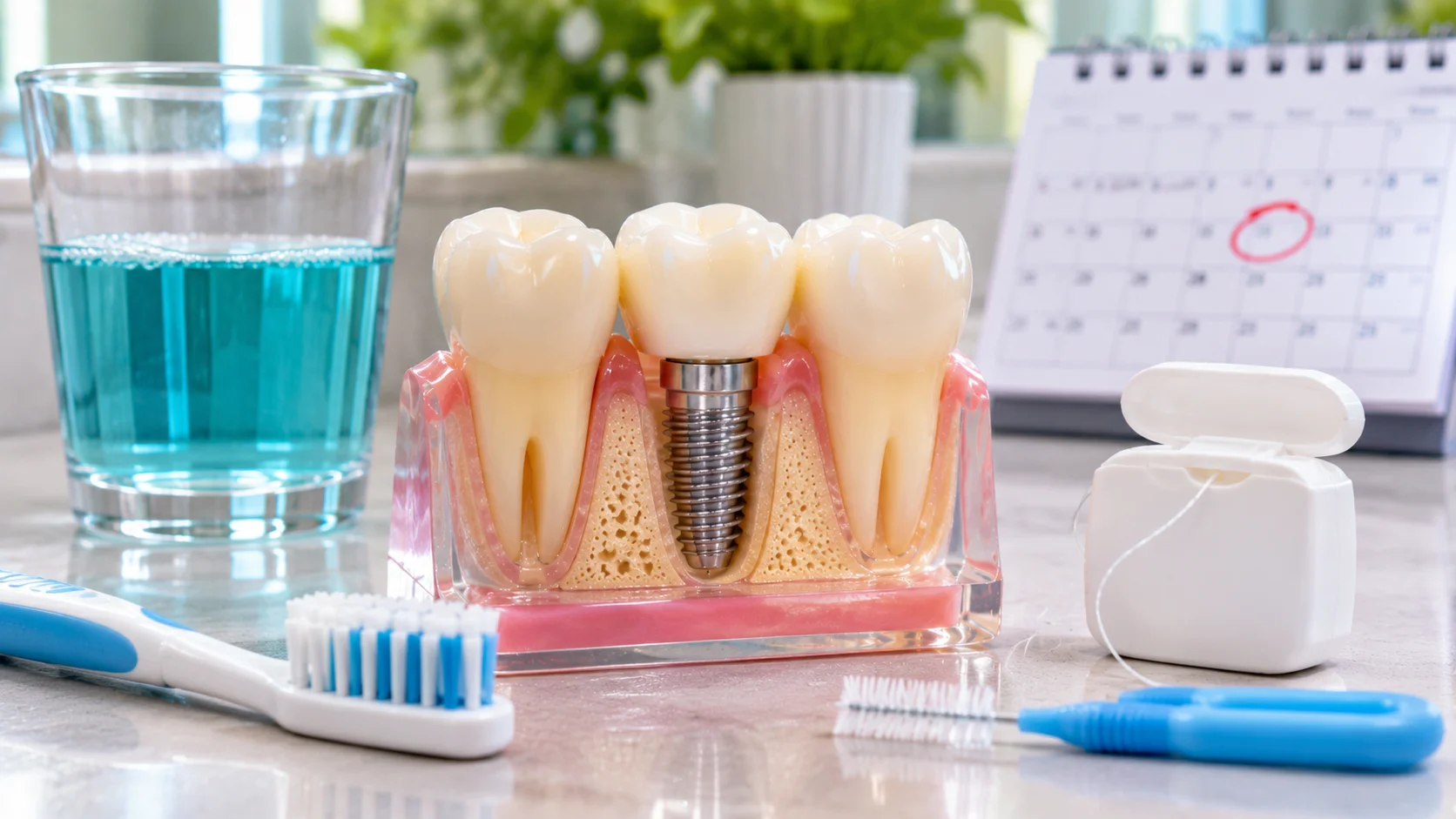
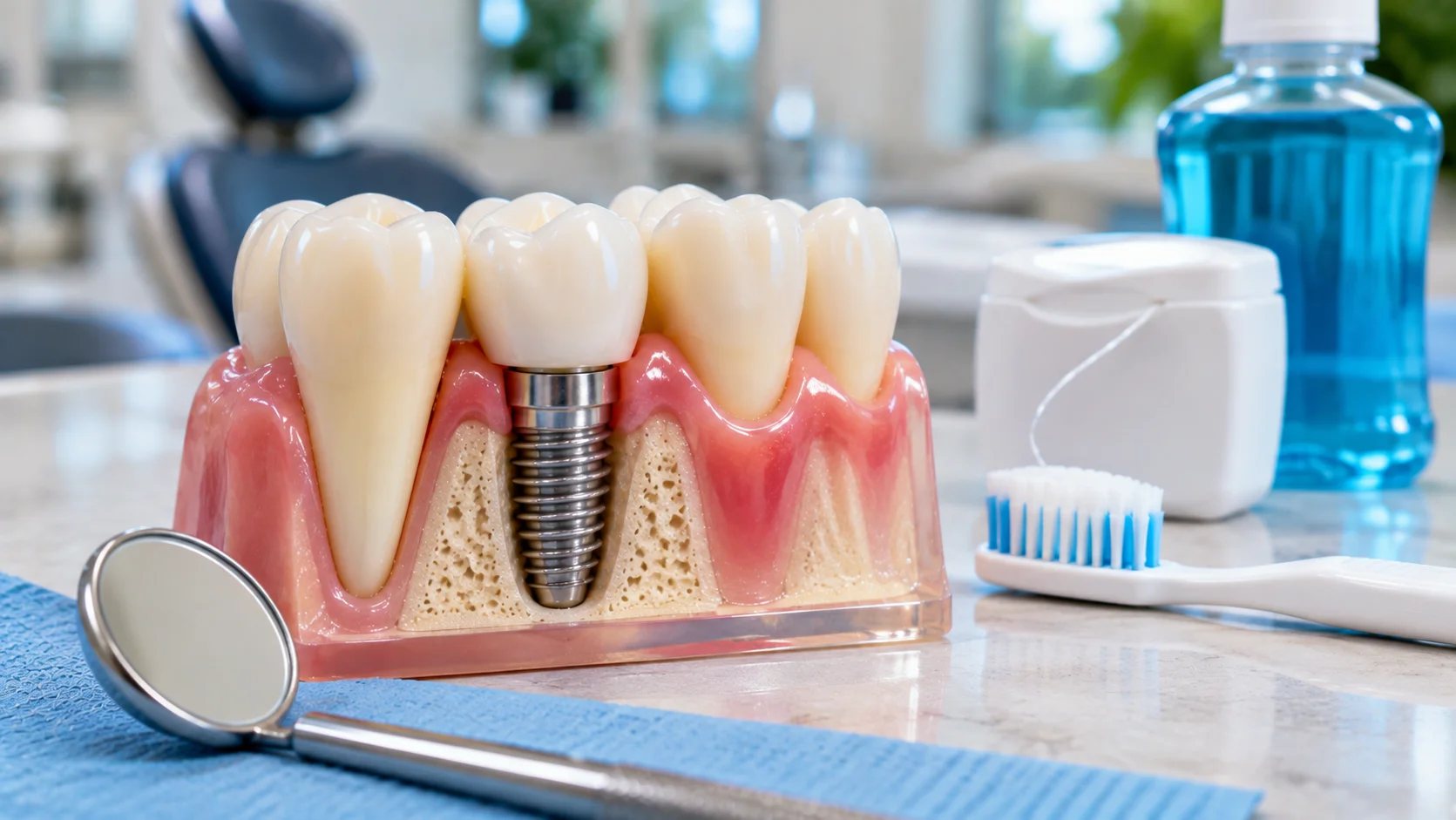
An implant itself cannot decay, but the gums and bone around it can still develop problems if plaque builds up. That is why implants need the same attention as natural teeth, and sometimes a little more. Think of your care in three layers: daily, weekly and yearly.
Daily Habits
Brush twice a day
Use a soft-bristled toothbrush and a non-abrasive toothpaste. Pay attention to where the implant crown meets the gumline, where plaque likes to collect.
Clean between your teeth
Floss, interdental brushes or a water flosser can all work, depending on your mouth. Ask us what we recommend for your implant, because the best tool depends on the shape of the restoration. If you have an implant-supported bridge or denture, there are specific cleaning methods to follow.
Rinse if recommended
Some patients benefit from an antimicrobial rinse for a period of time. Check with your dentist before adding one.
Weekly Habits
- Take a moment to look at your gums in the mirror. They should look firm and pink, without swelling or bleeding.
- Check that your restoration feels stable and your bite feels normal.
- Replace your toothbrush head or toothbrush every three months, or sooner if it looks worn.
Yearly Habits (Or More Often)
Professional cleanings and exams
Plan on regular visits, typically every six months, though your dentist may recommend a different schedule. We check the implant, the gums and the bone with X-rays when needed, and clean areas that are hard to reach at home. You can learn what happens at these visits on our cleaning and exam page.
Habits to Avoid
- Smoking and tobacco: these can interfere with healing and long-term gum health.
- Chewing ice or very hard objects: they can damage the crown or other parts of the restoration.
- Using your teeth as tools: same rule as natural teeth.
- Ignoring grinding: if you clench or grind, ask about a night guard to protect your implant and your teeth. Our jaw pain and TMJ page explains how we help.
Warning Signs to Call About
- Bleeding or swelling around the implant
- Persistent bad taste or bad breath
- Pain or tenderness that does not go away
- A crown that feels loose, or an implant that moves
- Gums that are receding around the implant
Catching a problem early gives you more options. If you notice any of these, do not wait for your next scheduled visit.
Why Gum Health Still Matters
Inflammation around an implant, sometimes called peri-implant disease, can affect the bone if it is not treated. That is why gum care is such a big part of long-term success, which we explain in why gum health comes first with dental implants.
What If I Had a Bone Graft or Extraction?
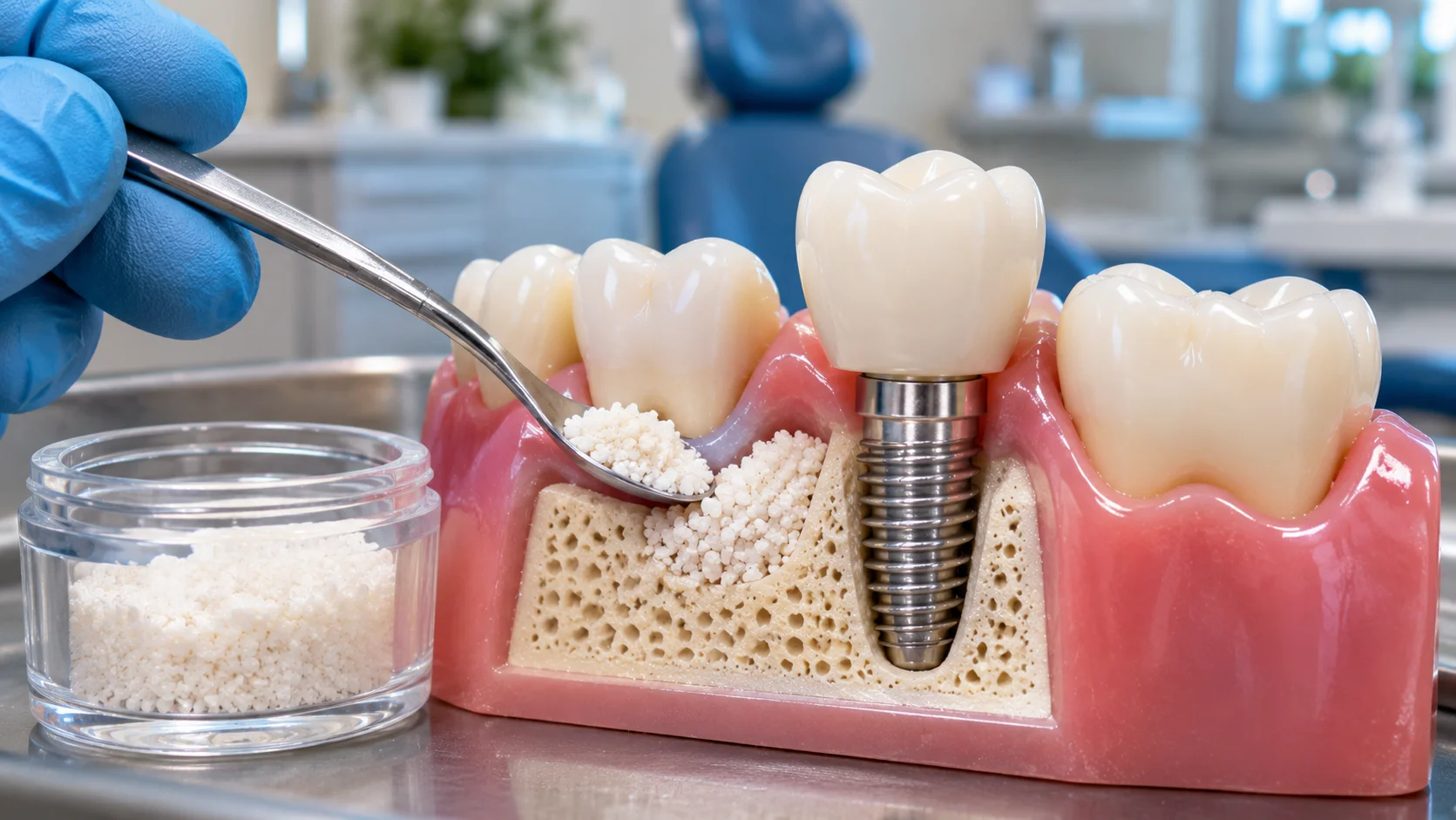
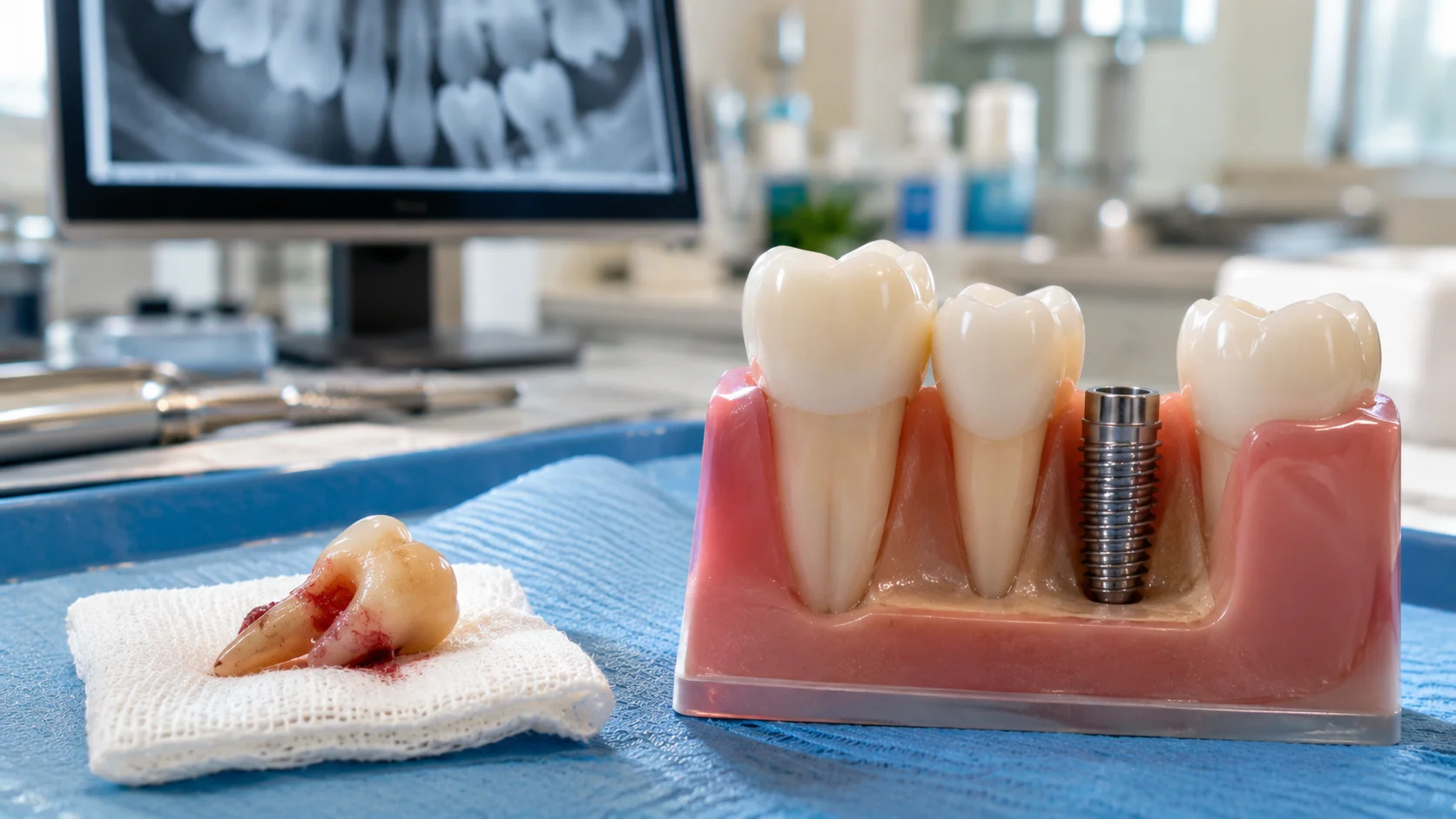
You may have extra instructions during healing, and then a regular routine afterward. See our explanation of bone grafting for dental implants for what that process looks like.
Special Care for Implant-Supported Bridges and Dentures
If your implants support a bridge or a denture, cleaning looks a little different. You will often need special floss, small interdental brushes or a water flosser to reach underneath the restoration. Some implant-supported dentures come out for cleaning, while others are fixed in place, and the instructions differ. Ask us to show you the right technique during your visit, since it is much easier to learn with someone watching. Regular professional cleanings are especially helpful here, because we can reach areas that are hard to clean at home and check that everything is stable.
Frequently Asked Questions
How long do implants last?
Many last for years with good care, and some for decades, but no one can promise a specific timeline. Your habits, health and regular checkups all play a role.
Do implants need special toothpaste?
Usually a gentle, non-abrasive toothpaste works. Ask us for recommendations.
Can I whiten an implant crown?
Implant crowns do not respond to whitening the way natural teeth do, so talk to us before whitening if you have restorations.
Protect Your Smile for the Long Run
If you are considering implants or already have them, a quick check-in with our team can keep you on track. Patients from North Hollywood, Valley Village and Burbank are welcome. See our dental implants page to learn more, and if you are still weighing the investment, read what affects dental implant cost.
NOHO Dental Group
11126 Chandler Blvd, North Hollywood, CA 91601
Phone: (747) 339-7016
View our location on Google Maps
Request an appointment online