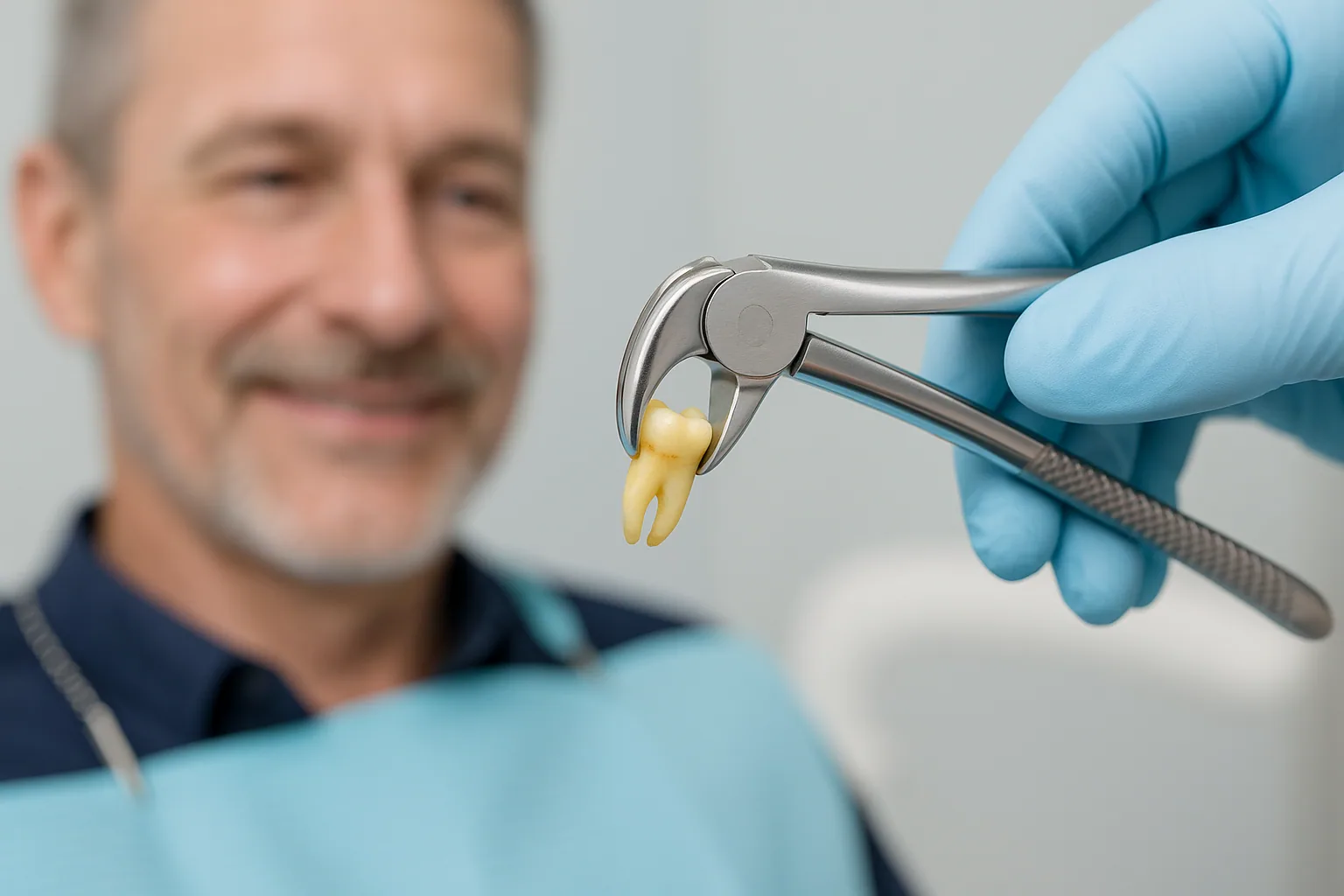


You bite into a sandwich and get a sharp jolt from a back tooth. Then nothing for three days. Then it happens again with a piece of toast. Patients often tell us they "can't tell which tooth it is," and that's typical of a cracked tooth: the crack is usually too fine to see, it may not show on an X-ray, and the pain comes and goes.
Common signs
- Sharp pain when biting, especially on something firm, or when letting go of the bite
- Sensitivity to cold, and sometimes to sweets
- Pain that is hard to pin to one tooth
- Discomfort that comes and goes rather than a constant ache
- Swelling of the gum near one tooth, in more advanced cases
What causes teeth to crack
- Grinding and clenching, often at night
- Large old fillings that leave thin walls of tooth around them
- Biting hard things such as ice, popcorn kernels, hard candy or pits
- Sudden temperature changes, like hot coffee followed by ice water
- Injury to the mouth
- Teeth that had a root canal and were never crowned
Types of cracks
Craze lines
Tiny surface lines in the enamel, very common in adults. They are usually cosmetic and need no treatment.
Fractured cusp
A piece of the chewing surface breaks, often around a filling. It rarely damages the nerve and is usually fixed with a new filling or a crown.
Cracked tooth
A crack runs from the chewing surface down toward the root. Caught early, the tooth can usually be saved, often with a crown. If the crack reaches the nerve, a root canal may also be needed.
Split tooth
A crack that has divided the tooth into separate pieces. Part of the tooth may be saved in some cases, but often it has to be removed.
Vertical root fracture
A crack that starts in the root. It may cause few symptoms until the gum or bone becomes infected, and these teeth usually need to be extracted.
How a dentist finds a crack
Cracks often don't show on X-rays. Your dentist may have you bite on a small tool one cusp at a time to find the spot that hurts, use a bright light or a dye to make the line visible, and check the gum around the tooth for deep, narrow pockets that can signal a crack in the root.
Treatment
Treatment is about holding the tooth together so the crack doesn't spread. Depending on the crack, that may be bonding or a filling, a crown that wraps the tooth, a root canal plus a crown, or extraction followed by an implant or bridge. The earlier a crack is treated, the more likely the simpler options will work. Read about restoring small problems on our dental fillings page and about crown choices in how to choose a dental crown.
What to do in the meantime
- Chew on the other side.
- Avoid very hot, very cold and hard foods.
- If there is a sharp edge, sugar-free gum or dental wax can protect your tongue for a short time.
- Don't wait for it to "settle." Cracks don't heal on their own.
Preventing cracks
Don't chew ice or use your teeth as tools, wear a mouthguard for sports, and ask about a custom night guard if you grind. Teeth with very large fillings may be better protected with a crown before they break.
Cracks don't heal, and they rarely stay the same size. If you keep getting that sharp pain when you bite, come in and let us find it while the fix is still small.