It is one of the most common cosmetic consultations in dentistry. A patient dislikes their crooked front teeth, has seen results online achieved with porcelain veneers, and wants that outcome without eighteen months of orthodontic treatment.
But there is a cost to that shortcut that is rarely explained clearly, and it is paid in something you cannot replace.
Key Factors to Understand Before Choosing Veneers Over Alignment
1. The Geometry Problem
A veneer is a thin shell of porcelain bonded to the front of a tooth. For the finished result to look natural, the veneer must sit within the normal arch, in line with the neighboring teeth.
If a tooth is already positioned correctly, only a minimal amount of enamel needs removing to accommodate the veneer thickness. If a tooth sits forward of where it should be, that tooth must be cut back to the correct position before the veneer can be placed. The further out of alignment it is, the more tooth must be removed.
In practice, using veneers to mask significant crowding can require removing several times more tooth structure than the same veneer on a properly aligned tooth.
2. Enamel Does Not Grow Back
Enamel is the hardest substance your body produces, and your body produces it exactly once. It cannot regenerate, and it cannot be restored. Once removed, that tooth is permanently dependent on being covered by something.
A conservatively prepared veneer on a well-aligned tooth removes a modest amount of enamel and the tooth remains largely intact beneath. An aggressively prepared tooth may have little enamel remaining, and at that point it is effectively a crown rather than a veneer.
The practical consequence arrives fifteen years later. When the porcelain eventually needs replacing, a tooth with healthy enamel beneath it can receive a new veneer. A heavily reduced tooth has fewer options.
3. Alignment Frequently Reduces How Much Work You Need
Consider a patient wanting to address eight crooked upper teeth. Masking the crowding with porcelain typically means veneering all eight to create a consistent appearance.
Straightening those same teeth first frequently reveals that most of them look entirely acceptable once properly positioned. What remains may be one chipped tooth and one that is slightly small, two teeth needing restorative work instead of eight.
Six to twelve months of aligners, followed by two veneers, commonly costs less than eight veneers and leaves six teeth completely untouched.
4. When Veneers Genuinely Are the Better Choice
- The teeth are already reasonably aligned but discolored, chipped, worn or misshapen. Orthodontics cannot fix color or shape.
- The teeth already have large restorations or existing crowns, so little intact enamel is being sacrificed.
- Intrinsic staining that does not respond to whitening, such as tetracycline discoloration.
- Genuinely fixed deadlines where orthodontics cannot fit the timeline.
- Small teeth or gaps where the issue is proportion rather than position.
The question is not whether veneers are good. They are excellent when properly indicated. The question is whether you are using them to solve a problem that alignment would solve while keeping your enamel.
Everyday Real-Life Scenarios: The Decision in Practice
Scenario A: Eight Veneers Became Two
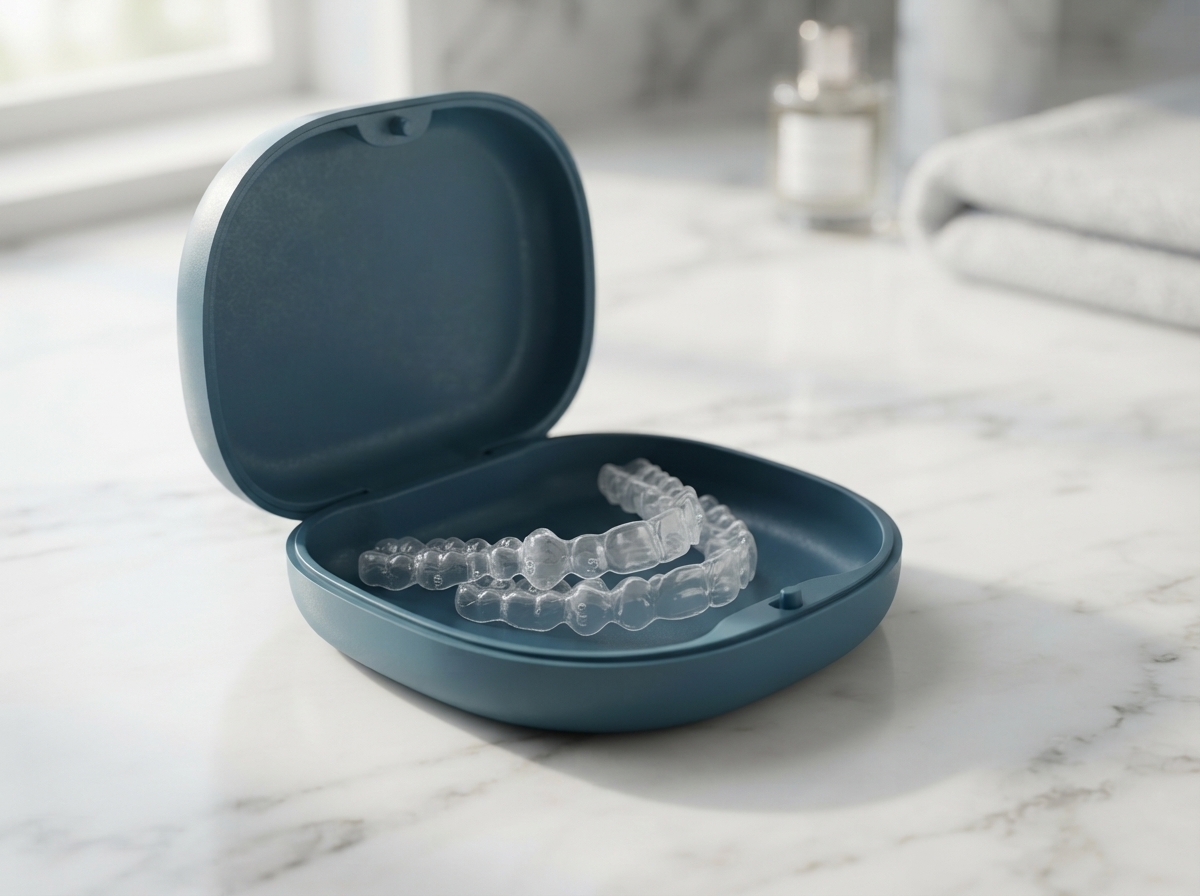
A patient requests eight upper veneers for crowding. The teeth are healthy, unrestored and simply out of position. Ten months of clear aligners brings them into alignment, after which only two teeth need any restorative work. The total cost is lower than the original plan, and six teeth are never touched at all.
Scenario B: Where Veneers Were the Right Call
Another patient has well-aligned upper front teeth with severe intrinsic staining from childhood antibiotic exposure, which does not respond to whitening. Orthodontics would achieve nothing here, since the position is already correct. Six conservatively prepared veneers address it directly.
Scenario C: The Cost of Skipping the Step
A third patient had veneers placed elsewhere over significantly crowded teeth, requiring aggressive preparation. Twelve years later two have chipped and need replacing. Because so little enamel remains, the replacements must be full crowns rather than veneers. The original shortcut saved a year and created a considerably more complicated situation later.
Frequently Asked Questions About Veneers and Alignment
Q1: How much tooth is actually removed for a veneer?
A: On a well-aligned tooth, a conservative preparation removes a modest layer of enamel, roughly half a millimeter. On a tooth positioned forward of the arch, considerably more must be removed. Ask specifically how much preparation your case requires.
Q2: Are there no-preparation veneers?
A: Minimal-preparation options exist and can be excellent where teeth are already well-aligned and slightly undersized. They are not suitable for masking crowding, because adding porcelain to a tooth already sitting too far forward makes it more prominent, not less.
Q3: Will straightening my teeth mean I do not need veneers at all?
A: Sometimes, yes, particularly if your teeth are healthy, well-shaped and a reasonable color. In many cases alignment substantially reduces how many veneers are needed rather than eliminating them entirely.
Q4: How long do veneers last, and what happens then?
A: Typically ten to fifteen years, often longer with good care and a night guard. When replacement time comes, what matters is how much healthy tooth remains beneath. That is why the amount of enamel preserved at the outset determines your position decades later.
Why Choose NoHo Dental Group for Cosmetic Treatment?
At NoHo Dental Group on Chandler Blvd, we provide both orthodontic treatment and cosmetic dentistry, which means our recommendation reflects what preserves your teeth rather than what fills our schedule. Alignment is planned by Dr. Allen Jacobson, DDS, MDS, a trained orthodontist.
Why North Hollywood Patients Trust Us:
- We Raise the Conservative Option: If straightening first would save you tooth structure and money, we will say so.
- Both Treatments In-House: A combined plan is coordinated by one team rather than split between practices.
- Preparation Discussed Openly: You will be told how much tooth structure your case requires removing before you commit.
- Mock-Up Before Anything Irreversible: You see the proposed result in your own mouth, with no drilling.
Contact our friendly team today.