
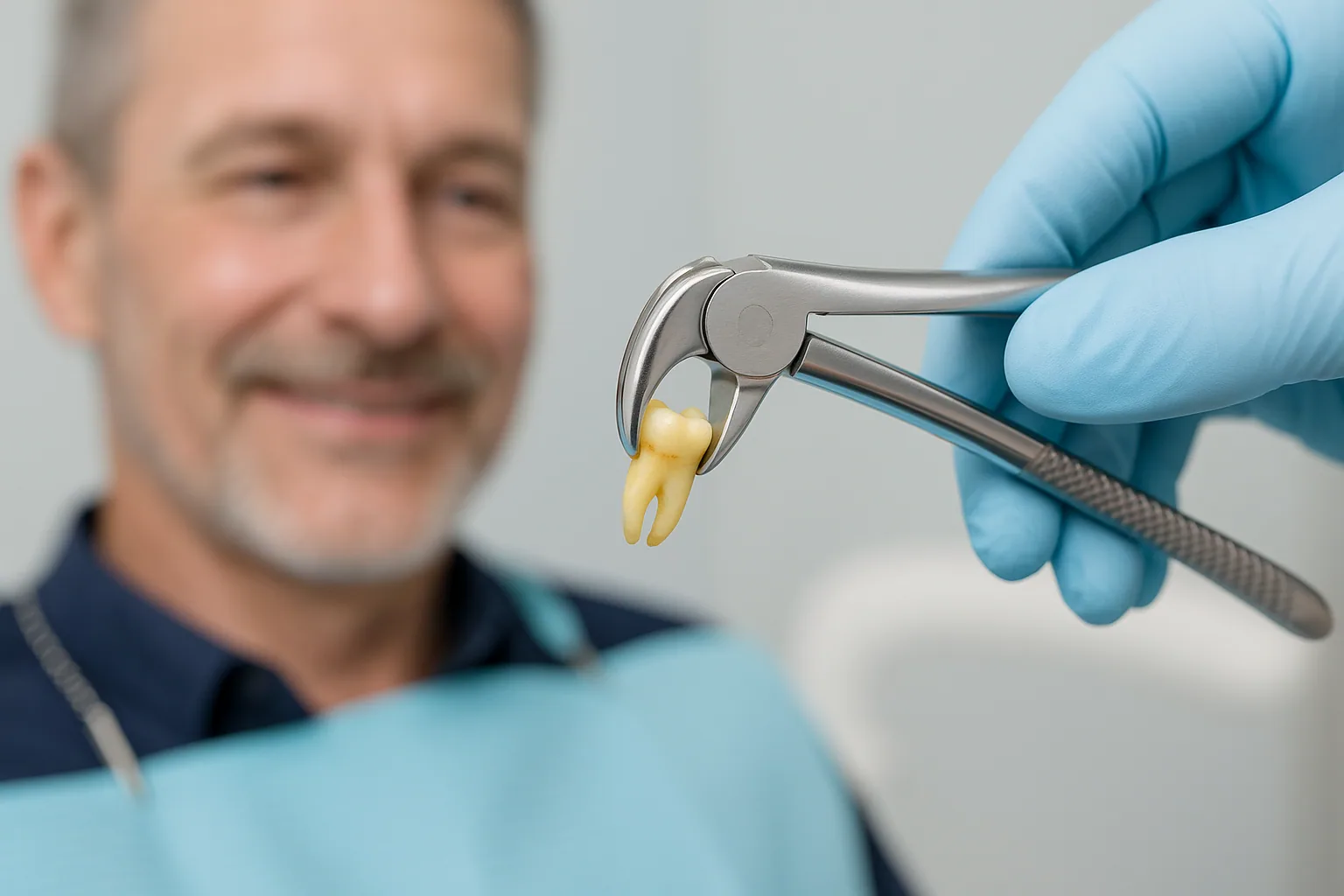

"Surgical extraction" sounds a lot scarier than it is. Patients sometimes hear the word and picture an operating room, when in most cases it means a small opening in the gum, done in the same chair as a filling, with the same numbing. Both simple and surgical extractions are routine. The real differences are how the tooth comes out and how many days of soreness to plan for.
Simple extraction
A simple extraction is used for a tooth that is fully visible in the mouth and has enough structure for the dentist to grip. After numbing the area, the dentist loosens the tooth with an instrument called an elevator, which gently widens the socket, and then removes it with forceps. You feel pressure, but not sharp pain.
Common reasons: a tooth with severe decay that can't be restored, a loose tooth from gum disease, baby teeth that won't come out on their own, or teeth removed to make room for braces.
Surgical extraction
A surgical extraction is needed when the tooth can't simply be lifted out. That includes:
- Wisdom teeth that are impacted or only partly erupted
- Teeth broken off at the gumline
- Teeth with long, curved or brittle roots
- Teeth fused to the surrounding bone
The dentist makes a small opening in the gum, may remove a little bone around the tooth, and sometimes divides the tooth into sections so it comes out in smaller pieces with less force. The area is usually closed with a few stitches. Local anesthesia is standard; sedation may be offered for longer procedures or anxious patients.
How recovery compares
After a simple extraction, most people have mild soreness for a day or two. After a surgical extraction, expect more swelling and discomfort, usually peaking around the second or third day and then improving. For both:
- Bite on gauze for the first hour to help a blood clot form.
- Don't smoke, spit forcefully or drink through a straw for several days; the suction can dislodge the clot.
- Use cold packs on the outside of the face for the first day.
- Eat soft, lukewarm foods and chew on the other side.
- Take pain relievers as your dentist recommends.
- Start gentle saltwater rinses the day after, if instructed.
The most common complication is dry socket, when the clot is lost and the bone is exposed. It causes throbbing pain a few days after the extraction. See how to prevent dry socket.
Call your dentist if
- Bleeding doesn't slow with firm pressure on gauze
- Pain gets worse after day three
- Swelling keeps increasing after day three, or you have a fever
- Numbness lasts much longer than the anesthesia should
Planning what comes next
When a back tooth is removed and not replaced, neighboring teeth can drift into the space and the bone slowly shrinks. If the tooth will be replaced with an implant, the dentist may place a bone graft in the socket at the time of extraction to preserve the area. Talk about replacement before the extraction, not after. Options are explained on our dental implants and dentures pages.
Preparing for your visit
- Bring a list of your medications, especially blood thinners and bone-density drugs.
- Eat a light meal beforehand unless you're having sedation that requires fasting.
- Arrange a ride if you'll be sedated.
- Stock up on soft foods at home.
If you've been told a tooth needs to come out and you're unsure whether it'll be simple or surgical, ask before the appointment. Knowing ahead of time helps you plan time off and meals. More details are on our tooth extractions page.