For millions of people, stepping into a dental office brings up feelings of nervousness, a racing pulse, or intense anxiety. While sedation dentistry has transformed modern healthcare by allowing fearful patients to receive essential treatments in total comfort, a crucial question often remains: Is sedation dentistry actually safe? It is completely natural to have questions about safety whenever medications or relaxing techniques are involved. The short answer is yes—sedation dentistry is exceptionally safe when administered by trained, experienced clinicians using modern monitoring protocols. If you are considering sedation in North Hollywood to help manage anxiety or complete needed treatments, here is everything you need to know about safety protocols, health evaluations, and how your care team protects you every step of the way.
- Safety Built on Strict Medical Standards Modern dental sedation is backed by decades of clinical refinement, rigorous regulatory guidelines, and advanced pharmacology. Sedation isn't a "one-size-fits-all" approach; it relies on precise, controlled methods tailored strictly to your physiological profile. Why Dental Sedation Is So Safe Today:
- Targeted Conscious Sedation: Unlike general anesthesia used in hospital operating rooms (where you are completely unconscious and require a breathing tube), dental office sedation uses conscious sedation. You remain breathing on your own, your protective reflexes remain active, and your body stays stable throughout.
- Short-Acting, Highly Predictable Medications: Whether using inhaled nitrous oxide or oral anti-anxiety medications, the agents used today have well-established safety profiles, fast onset times, and predictable recovery windows.
- Reversibility: In the rare event of heightened sensitivity to an oral medication, clinicians have immediate reversal agents on hand that neutralize sedative effects within moments.
- The Patient Evaluation: Your First Line of Safety Safety does not begin when you sit in the chair for your procedure—it starts during your initial consultation long before any treatment takes place. A comprehensive clinical team conducts a detailed health screening to confirm that you are an ideal candidate for sedation: What Your Doctor Reviews Prior to Sedation:
- Full Medical History: Identifying underlying conditions such as cardiovascular health, respiratory function, liver or kidney health, and high blood pressure.
- Current Medications & Supplements: Reviewing all prescription drugs, over-the-counter medications, and herbal supplements to prevent potential drug interactions.
- Allergies & Past Anesthesia Reactions: Checking for previous sensitivities to medications or local numbing agents.
- Airway Assessment: Evaluating your nasal passages, throat, and neck structure to ensure clear, unobstructed breathing throughout your visit. By thoroughly co-evaluating your health history, your doctor selects the exact sedation modality—such as mild nitrous oxide or moderate oral conscious sedation—that delivers maximum comfort with zero compromise on safety.
- Continuous Vital Signs Monitoring During Care During a sedated dental appointment, you are never left alone. Clinical monitoring protocols match hospital-grade standards to track your body's vital functions continuously. What Is Monitored Throughout Your Procedure:
- Pulse Oximetry: A tiny, painless sensor placed on your fingertip continuously measures oxygen saturation levels in your blood as well as your pulse rate.
- Automatic Blood Pressure Tracking: Digital cuffs track your blood pressure at regular intervals to confirm cardiorespiratory stability.
- Heart Rate & Rhythm: Monitoring equipment ensures your heart remains steady and relaxed.
- Dedicated Clinical Presence: In addition to your doctor, a trained clinical assistant remains focused on your physical comfort, monitoring your breathing depth and responsiveness at every moment.
- Comparing the Safety Profiles of Common Sedation Options Understanding the specific safety characteristics of each sedation option helps you feel confident in your choice:
A. Nitrous Oxide ("Laughing Gas")
- Safety Profile: Highest safety rating in modern dentistry.
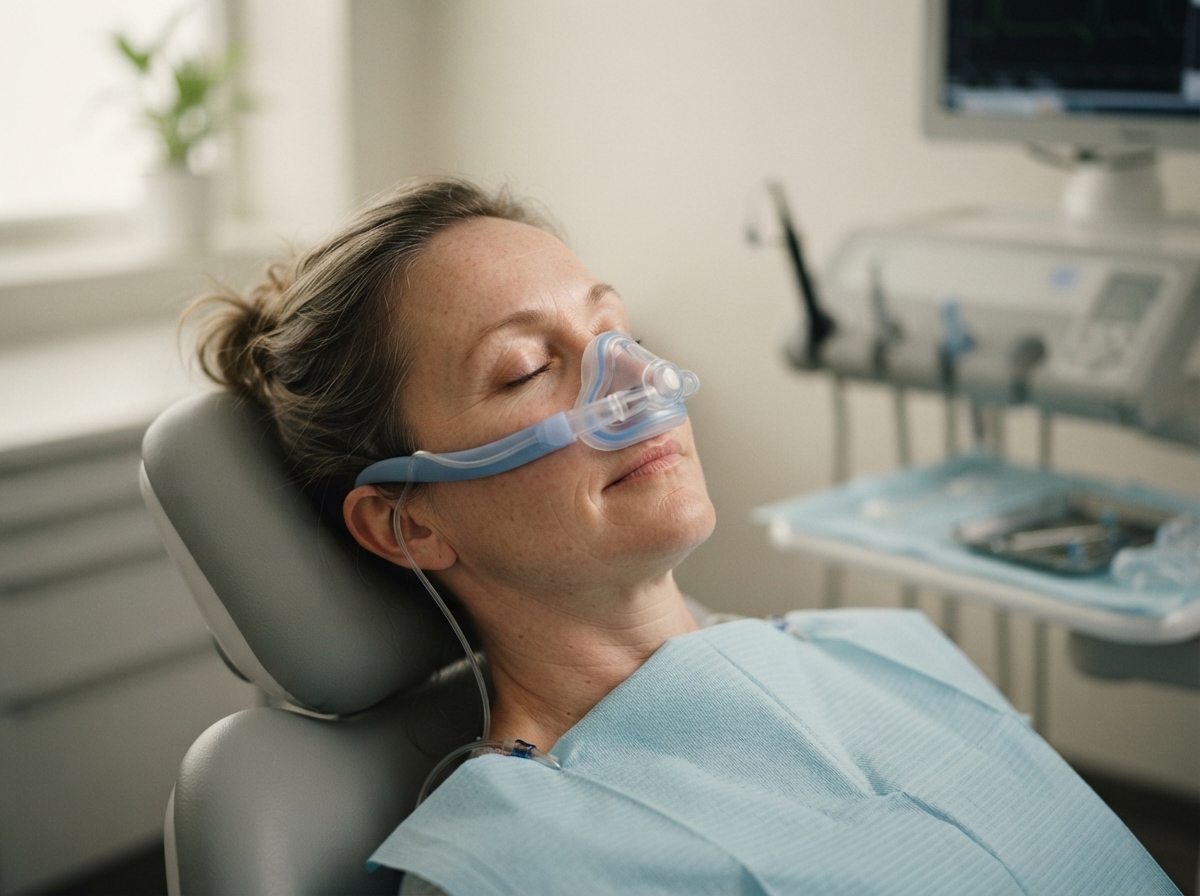
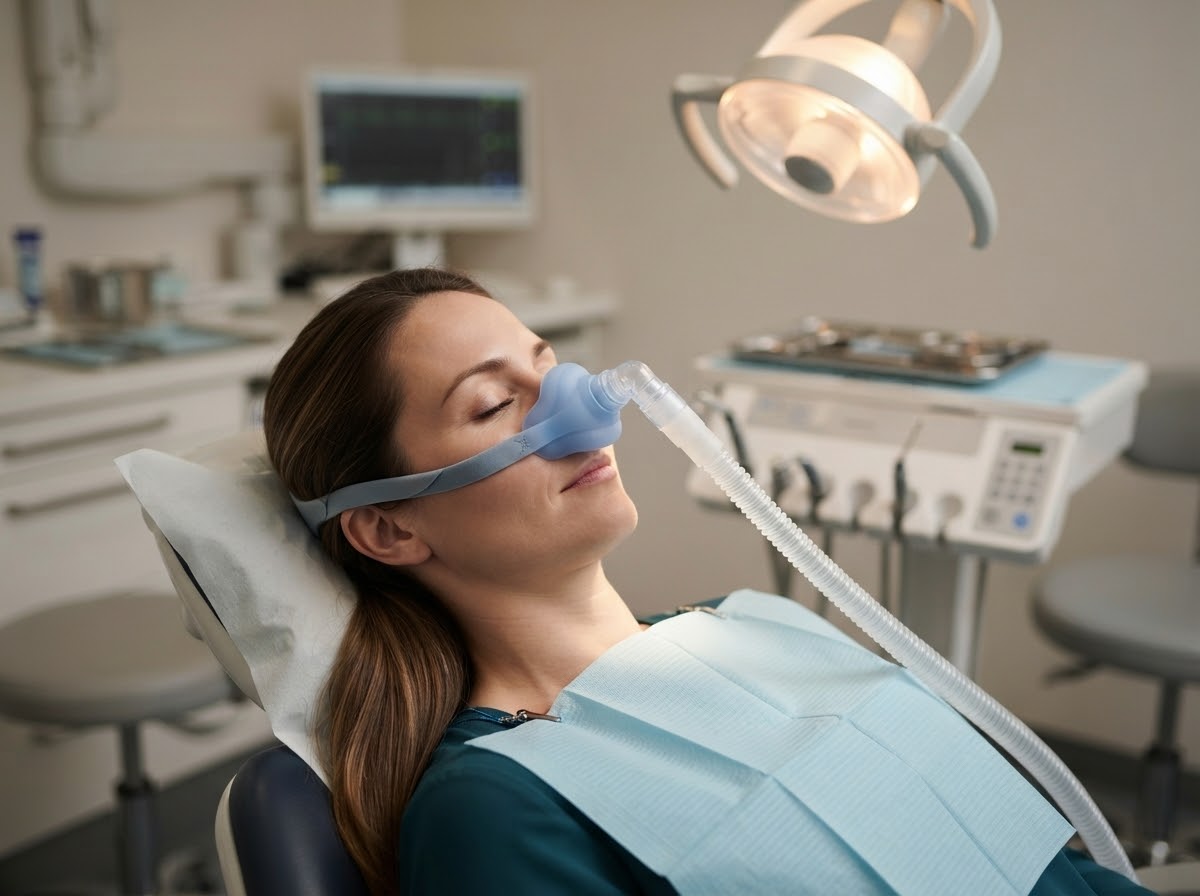
- How It Works: Blended with pure oxygen and inhaled through a soft nose mask.
- Key Safety Feature: It does not metabolize in the liver or kidneys; it is eliminated through normal breathing within 3 to 5 minutes after pure oxygen is flushed through the mask. Safe for adults, seniors, and in kids dentistry. B. Oral Conscious Sedation
- Safety Profile: Exceptionally safe and effective for moderate-to-severe anxiety.
- How It Works: A prescribed, well-tested anti-anxiety pill taken about an hour before treatment.
- Key Safety Feature: You remain fully conscious and able to respond to gentle verbal cues while feeling deeply relaxed or resting peacefully. Requires a driver to transport you safely home afterward. Safety Checklist: Nitrous Oxide vs. Oral Sedation
Safety Parameter
Nitrous Oxide
Oral Conscious Sedation
Sedation Depth
Mild / Gentle
Moderate / Deep Relaxation
Protective Reflexes Intact?
Yes (100%)
Yes (100%)
Breathe On Your Own?
Yes
Yes
Continuous Vital Monitoring?
Standard
Continuous Digital Tracking
Post-Care Driver Required?
No (Clears in minutes)
Yes (Requires companion)
Real-World Everyday Scenarios: Prioritizing Patient Safety
Scenario A: A Patient with High Blood Pressure and Dental Anxiety
Imagine needing a gentle root canal therapy visit, but your fear of the appointment causes your blood pressure to spike. Attempting treatment while extremely stressed can be taxing on your body. Utilizing mild nitrous oxide sedation calms your nervous system, keeps your pulse and blood pressure steady, and allows your doctor to complete the treatment safely and comfortably.
Scenario B: Restoring Teeth Safely for a Senior Patient
You are in your 70s and want to replace missing molars with permanent dental implants, but take daily blood pressure medication. Your doctor reviews your medical history, coordinates with your physician, and chooses a tailored oral sedation protocol. Your vitals are continuously monitored, the implants are placed gently, and you wake up resting comfortably with complete safety maintained.
Frequently Asked Questions About Sedation Safety
Q1: Can I have an allergic reaction to dental sedation? A: True allergic reactions to nitrous oxide or commonly used oral sedatives (such as benzodiazepines) are extraordinarily rare. Reviewing your full allergy history prior to prescribing any medication ensures complete safety. Q2: What should I do to prepare for a safe sedated appointment? A: Your clinical team will give you simple pre-care instructions. For oral sedation, this typically includes fasting from solid foods for a few hours prior to your visit, taking your prescribed medication as directed, and arranging for a responsible adult to drive you home afterward. Q3: Is sedation safe if I have sleep apnea or asthma? A: Patients with controlled asthma or mild sleep apnea can usually receive sedation safely. Nitrous oxide actually delivers extra oxygen during care! Your doctor will evaluate your airway during your consultation to determine the safest approach for your breathing patterns. Q4: Will local numbing still be used with sedation? A: Yes. Sedation relaxes your mind and body so you feel calm, while local numbing ensures the treatment area itself feels zero pain. Because sedation reduces stress, local anesthetics actually work more effectively and require less volume.
Experience Safe, Relaxing Care at NoHo Dental Group
If dental fear has caused you to put off important care, NoHo Dental Group is here to welcome you with warm, judgment-free care. Located centrally on Chandler Blvd, our modern facility serves individuals and families across North Hollywood, Valley Village, and Burbank with precision technology and compassionate safety standards. Why San Fernando Valley Patients Trust Us:
- Uncompromised Safety & Expertise: We follow rigorous screening, health co-evaluation, and continuous digital monitoring protocols for every sedated appointment.
- Comprehensive Multi-Specialty Services: From preventative cleaning & exam visits, kids dentistry, and clear aligner orthodontics to advanced root canal therapy, jaw pain & TMJ relief, sleep apnea appliances, custom tooth veneers, and permanent dental implants, we handle all your care under one roof.
- Tailored Sedation Care: We offer gentle nitrous oxide and oral conscious sedation options customized strictly to your health profile and comfort needs.
- State-of-the-Art Digital Diagnostics: We utilize 3D intraoral optical scanners, low-radiation digital x-rays, and high-definition intraoral cameras to plan every procedure with absolute accuracy.
- Aesthetic Transformations: Reclaim your smile with clinical teeth whitening, clear aligners, or custom cosmetic makeovers designed around your peace of mind. Prioritize your oral health in an environment built around complete safety and relaxation. Contact our friendly North Hollywood team today to schedule your personalized sedation consultation!
Contact Information
- Practice Name: NoHo Dental Group
- Phone Number: (747) 339-7016
- Address: 11126 Chandler Blvd, North Hollywood, CA 91601
- Website: nohodentalgroup.com