
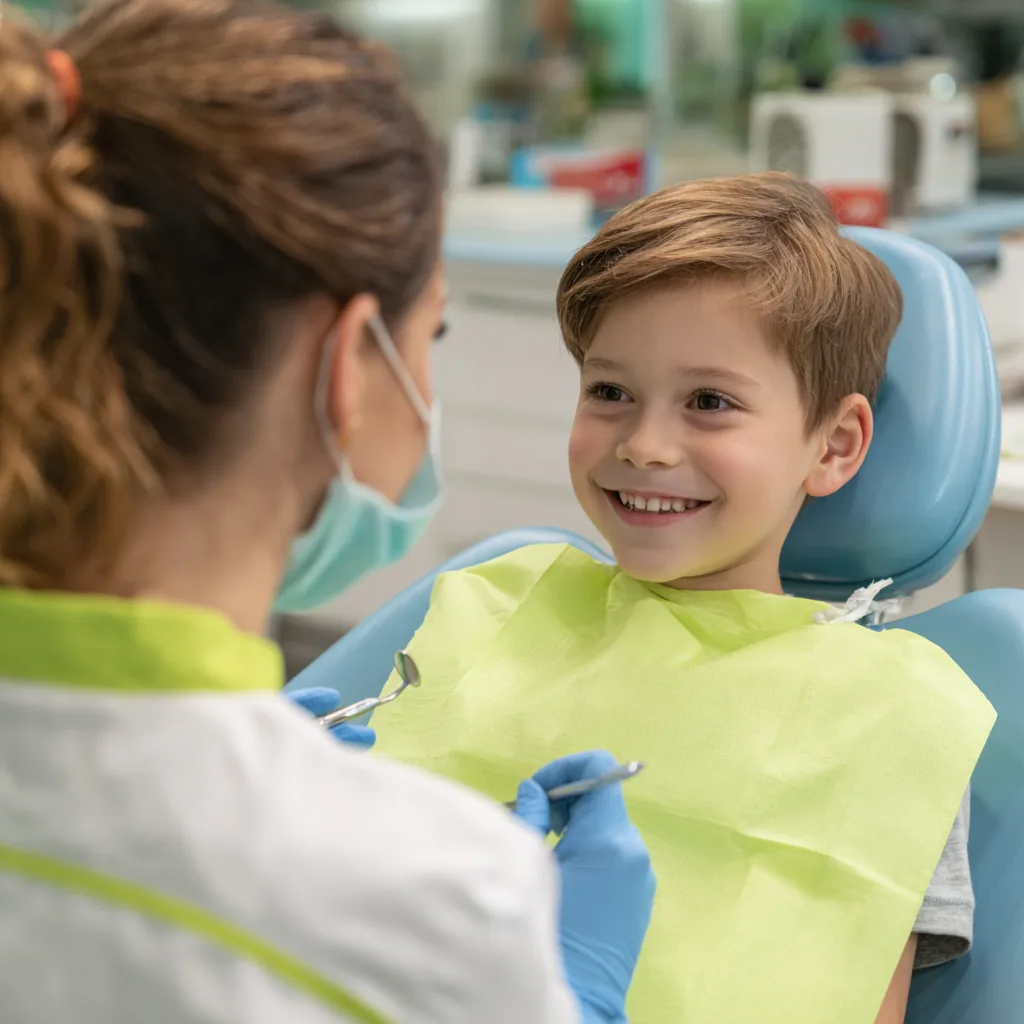

Look at a child's back molar up close and you'll see deep grooves running across the top, some narrower than a single toothbrush bristle. That's where most kids' cavities start, not on the smooth sides. Dental sealants fill those grooves with a thin coating so food and bacteria have nowhere to hide. No shots, no drilling, and it takes a few minutes per tooth.
What a sealant is
A sealant is a thin, tooth-colored or clear resin painted onto the chewing surface of a molar. It flows into the grooves and hardens, leaving a smooth surface that is easier to clean and harder for bacteria to settle into. It doesn't change how the tooth looks or feels to the child.
When children usually get them
Timing follows the permanent molars:
- First permanent molars usually come in around age 6.
- Second permanent molars usually come in around age 12.
Sealants work best when placed soon after these teeth come in, before decay has a chance to start. Some children with deep grooves on baby molars, or a high cavity risk, may benefit from sealants on baby teeth too. Teens and adults with deep grooves and no fillings can also get them.
How sealants are placed
- The tooth is cleaned.
- The chewing surface is prepared with a gentle solution, rinsed and dried.
- The sealant is painted into the grooves.
- A blue curing light hardens it in a few seconds.
There are no needles and no drilling. Each tooth takes only a few minutes, which makes sealants a good fit for short, calm visits with younger children.
How long sealants last
Sealants can last several years, but they wear with chewing. At each checkup the dentist looks at them and touches up any area that has chipped or worn away. Repairing a sealant is just as quick as placing one.
Are sealants safe?
Parents sometimes ask about BPA in dental materials. The amount of exposure from a sealant is extremely small, lower than what people encounter from everyday sources, and it is limited to the moments right after placement. Major dental organizations continue to recommend sealants for children at risk of cavities. If you have questions about materials, ask your dentist at the visit.
Sealants aren't a replacement for brushing
Sealants protect the chewing surfaces only. Cavities can still form between teeth and along the gumline, so children still need:
- Brushing twice a day with fluoride toothpaste (a rice-grain smear for toddlers, a pea-sized amount from age 3)
- Flossing once teeth touch each other
- Limited sugary drinks and snacks between meals
- Regular checkups
Fluoride works alongside sealants by strengthening the rest of the tooth surface. We cover it in fluoride for kids: the myths and the science and in preventing cavities in children.
Does insurance cover sealants?
Many dental plans cover sealants on permanent molars for children up to a certain age. Coverage varies, so we are happy to check your benefits before the visit.
Sealants at NOHO Dental Group
A good rule of thumb: when you notice new molars coming in behind the baby teeth, around age 6 and again around 12, that's the time to ask about sealants. We place them during regular kids visits, often at the same appointment as the cleaning.