
When dealing with a missing tooth, choosing how to restore your smile is one of the most important decisions you will make for your long-term health, appearance, and financial budget. While leaving a gap might seem like an option initially, missing teeth cause neighboring teeth to drift, alter your bite alignment, and initiate irreversible bone loss in your jaw. The two most common clinical solutions for replacing missing teeth are dental implants and traditional dental bridges. While both options successfully fill the visual gap in your smile, they function fundamentally differently beneath the surface. If you are deciding between these two popular treatments in North Hollywood, here is a detailed breakdown of how dental implants and traditional bridges compare when it comes to preserving your jawbone, protecting surrounding teeth, and delivering real value for your wallet over time.
- Jawbone Preservation: The Biological Battle To understand how each treatment affects your jawbone, it helps to look at what happens when a tooth root is removed. Natural tooth roots do far more than anchor teeth; every time you bite down, the root sends mechanical stimulation deep into the surrounding jawbone. This stimulation signals your body to continuously rebuild bone density. When a tooth root is lost, that mechanical stimulation stops completely, causing the jawbone in that area to shrink and resorb back into the body over time. How Traditional Dental Bridges Work: A traditional fixed bridge consists of an artificial tooth (pontic) held in place by custom crowns bonded onto the healthy natural teeth on either side of the gap.
- The Biological Limitation: A bridge only replaces the visible upper crown of the tooth—it does not replace the missing tooth root.
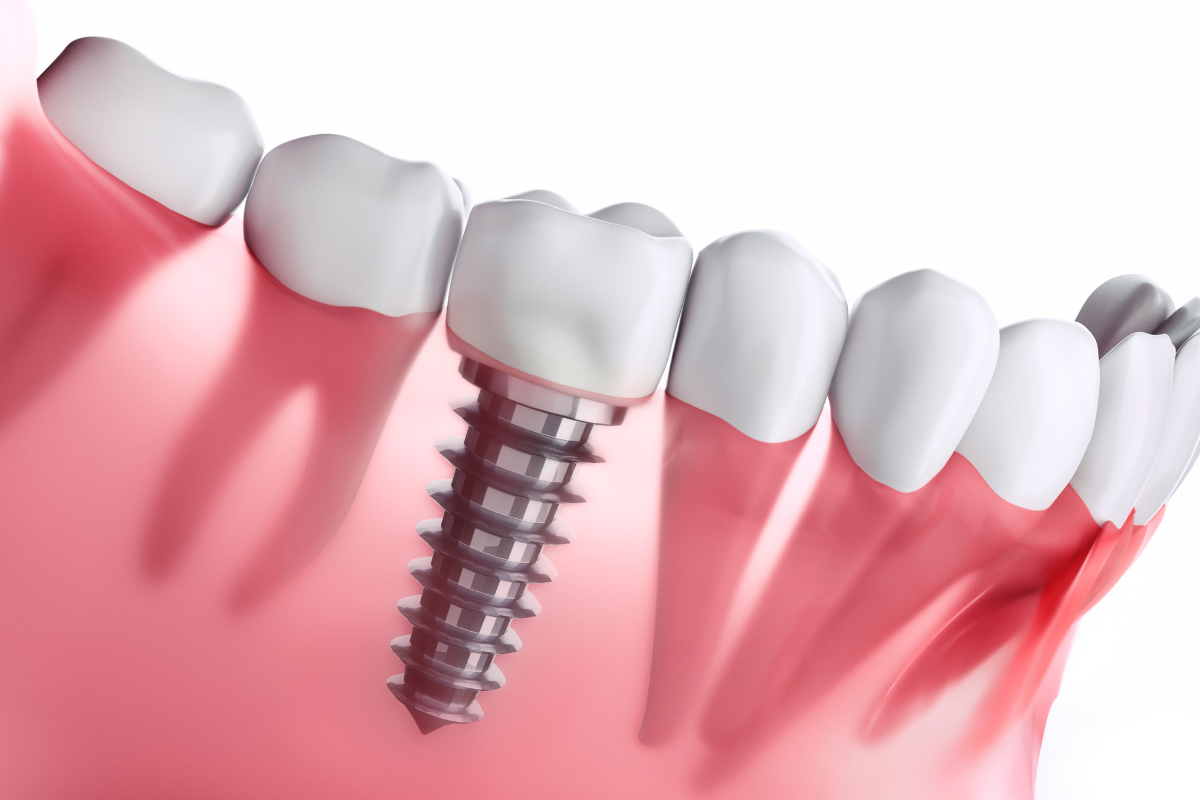
- The Bone Loss Reality: Because the artificial tooth simply floats above the gumline, the jawbone beneath the bridge receives zero mechanical stimulation. As a result, the underlying jawbone continues to shrink and deteriorate over time, which can eventually create an unsightly gap between your bridge and your gums. How Dental Implants Work: A dental implant replaces both the visible crown and the invisible root structure. A biocompatible titanium post is surgically anchored directly into the jawbone, where it undergoes osseointegration (fusing with living bone tissue).
- Active Bone Preservation: The titanium implant post acts just like a natural tooth root. When you chew, it transfers force directly into the jawbone, stimulating bone growth and 100% halting jawbone loss.
- Facial Structure Support: By preserving your natural jawbone height and density, implants prevent the sunken, aged facial appearance that often accompanies long-term bone resorption.
- Impact on Neighboring Natural Teeth Preserving your overall oral health means protecting your natural, healthy teeth whenever possible.
- Traditional Bridges Require Modifying Healthy Teeth: To anchor a traditional bridge, your doctor must shave down and remove significant healthy enamel from the teeth on both sides of the gap so they can fit supporting crowns. Stripping away enamel permanently compromises those neighboring teeth, increasing their future risk of decay, nerve damage, or needing root canal therapy down the road.
- Implants Stand Independently: A dental implant is completely self-supporting. It is placed directly into the empty socket space without touching, grinding down, or compromising neighboring natural teeth. Your surrounding tooth structure remains 100% intact, healthy, and pristine.
- Financial Comparison: Short-Term Upfront Cost vs. Long-Term Value One of the biggest factors patients weigh when choosing a restoration is the initial financial investment. While a traditional bridge may seem cheaper upfront, looking at the long-term lifetime value changes the financial equation completely. Short-Term Upfront Costs:
- Traditional Dental Bridges: Typically have a lower initial upfront cost. Dental insurance plans often cover a higher percentage of fixed bridges, making them an attractive short-term choice for immediate budget constraints.
- Dental Implants: Feature a higher initial financial investment due to the specialized titanium materials, 3D diagnostic imaging, and surgical precision involved. Long-Term Lifetime Value (Your Wallet Over Time):
- Bridge Lifespan (7 to 10 Years): Clinical studies show that traditional bridges average a lifespan of 7 to 10 years before requiring repair or full replacement. Furthermore, because decay frequently develops under supporting bridge crowns, a failing bridge can lead to losing additional anchor teeth over time, multiplying future restoration costs.
- Implant Lifespan (Lifetime Post): The titanium post of a dental implant is engineered to last a lifetime, while the custom porcelain crown on top typically lasts 15 to 20+ years. Because implants cannot develop cavities and do not rely on adjacent teeth, they rarely require major reinvestment. When calculated over 20 or 30 years, dental implants frequently turn out to be the far more cost-effective choice for your wallet.
Quick Comparison: Implants vs. Bridges
Feature
Dental Implants
Traditional Bridges
Replaces Root Structure?
Yes (Titanium post)
No (Floats above gums)
Preserves Jawbone Density?
Yes (Halts bone loss)
No (Bone resorbs over time)
Requires Shaving Adjacent Teeth?
No (Completely independent)
Yes (Must grind adjacent enamel)
Risk of Cavities?
Zero (Titanium/Ceramic)
High under supporting crowns
Average Lifespan
Lifetime (Post) / 15–20+ Yrs (Crown)
7 to 10 Years
Long-Term Cost Efficiency
Highest (Rarely replaced)
Lower upfront / Higher long-term
Real-World Everyday Scenarios: Choosing What Matters
Scenario A: Replacing a Missing Molar in a Healthy Arch
Imagine losing a single lower molar, but the teeth on either side are completely healthy and have never had fillings. Choosing a traditional bridge requires shaving away the healthy enamel of those two neighboring teeth just to hold one replacement. Choosing an implant allows you to replace the missing molar independently, preserving your neighboring healthy teeth while stopping jawbone loss underneath.
Scenario B: Restoring Confidence in Your Daily Routine
You enjoy dining out in the NoHo Arts District, but a missing tooth makes chewing certain foods uncomfortable. While a traditional bridge restores basic chewing function, an implant restores full, natural bite strength—allowing you to bite into crisp apples or steak with total confidence, knowing your restoration is anchored firmly into your natural jawbone.
Frequently Asked Questions About Implants and Bridges
Q1: Is everyone a candidate for dental implants? A: Most healthy adults are excellent candidates for implants! Primary requirements include healthy gums and sufficient jawbone density to support the titanium post. If you have experienced bone loss from a long-missing tooth, modern procedures like bone grafting can easily rebuild the bone to make implant placement safe and successful. Q2: How long does the dental implant process take compared to a bridge? A: A traditional bridge can typically be completed in 2 to 3 weeks over two appointments. Dental implants take longer because the titanium post requires a healing period of 3 to 6 months to fuse permanently with the jawbone (osseointegration) before the final custom crown is attached. During this healing phase, a temporary restoration can be worn so you never have to leave with a gap. Q3: How do I clean and care for an implant vs. a bridge? A: Cleaning an implant is as simple as caring for a natural tooth—you brush normally and slide standard floss between your teeth effortlessly. Traditional bridges require special flossing tools (floss threaders or water flossers) to sweep food debris and plaque out from underneath the fake floating tooth, making daily oral hygiene more meticulous. Q4: Can an existing traditional bridge be replaced with dental implants later? A: Yes! If you currently have an old, failing bridge or dislike the aesthetic appearance as your gums recede, your doctor can remove the old bridge, evaluate the health of your jawbone, and transition your smile to permanent implants.
Make the Right Choice for Your Health at NoHo Dental Group
Whether you choose the permanent, bone-preserving power of dental implants or the quick restoration of a traditional bridge, our multi-specialty team at NoHo Dental Group is here to help you navigate your options with complete honesty and clinical excellence. Located centrally on Chandler Blvd, our practice serves families across North Hollywood, Valley Village, and Burbank. Why San Fernando Valley Patients Trust Us:
- Comprehensive Multi-Specialty Care: From foundational cleaning & exam care, kids dentistry, and orthodontics to advanced root canal therapy, jaw pain & TMJ relief, sleep apnea appliances, custom tooth veneers, and permanent dental implants, we manage all your oral health needs under one roof.
- Advanced Digital Precision: We utilize low-radiation digital x-rays, high-definition intraoral cameras, and 3D intraoral optical scanners to analyze your jawbone density and plan restorations with total accuracy.
- Gentle, Stress-Free Philosophy: We specialize in caring for nervous or anxious patients, offering gentle numbing techniques, clear communication, and a relaxing, judgment-free atmosphere.
- Transparent Pricing & Guidance: We provide itemized, upfront cost breakdowns and co-diagnose your treatment options together, ensuring you make the decision that best fits your health goals and budget. Protect your jawbone and invest in a lifetime of confident smiling. Contact our friendly North Hollywood team today to schedule your personalized restoration consultation!
Contact Information
- Practice Name: NoHo Dental Group
- Phone Number: (747) 339-7016
- Address: 11126 Chandler Blvd, North Hollywood, CA 91601
- Website: nohodentalgroup.com