
When we think about facial aging, our minds immediately go to skin deep solutions—wrinkle creams, serums, collagen supplements, or cosmetic dermatological procedures. However, many people are unaware that one of the primary drivers of premature lower facial aging isn't happening in the skin at all; it takes place deep within the structure of the jawbone. Losing a tooth—whether a back molar or a front incisor—triggers a rapid biological reaction beneath the gums. Without the structural support of natural tooth roots, the jawbone begins to melt away in a process known as bone resorption. Over time, this loss of underlying bone volume alters the physical architecture of your face, leading to sunken cheeks, thinned lips, and deep facial folds. Here is how missing teeth cause subtle structural changes beneath the skin, how permanent dental implants halt bone resorption, and why restoring your smile is one of the most effective ways to preserve a youthful facial appearance.
- The Anatomy of Jawbone Loss: Why Teeth Keep You Looking Young To understand how teeth support your facial features, it helps to view your jawbone as an active, living organ. Natural tooth roots do far more than simply anchor teeth so you can chew food; every time you bite down, the root transfers micro-vibrations and mechanical forces deep into the surrounding jawbone. This daily stimulation signals your body to continuously send blood flow, nutrients, and minerals to the jaw, keeping the bone dense, thick, and strong. What Happens When a Tooth Root Is Lost? When a tooth is removed or lost to injury, that critical mechanical stimulation stops instantly. Recognizing that the bone in that area no longer has a root to support, your body begins to reabsorb the bone minerals back into the bloodstream.
- The First Year: Within the first 12 months following a tooth extraction, the jawbone in that specific area can lose up to 25% of its total width, and height loss quickly follows.
- Progressive Atrophy: Over several years, progressive bone loss spreads across the jaw arch, shrinking the total height of the lower face.
- How Bone Resorption Causes Premature Facial Aging Your jawbone serves as the primary structural foundation for the skin, muscles, and soft tissues of your lower face. As the jawbone shrinks due to unaddressed tooth loss, that internal structural scaffolding collapses, causing noticeable changes to your facial profile: Key Signs of "Dental" Facial Aging:
- Collapsed Lower Face Height: As the upper and lower jawbones lose vertical height, the distance between the tip of your nose and the point of your chin shortens. This causes the lower face to look compressed or folded inward.
- Sunken Cheeks and Hollow Appearance: Without jawbone density and teeth pushing outward against the cheek muscles, the cheeks sink inward, creating a prematurely aged or tired look.
- Thinning Lips and Deep Lip Lines: Teeth provide the physical support that holds the lips forward. When teeth are missing, the lips roll inward, thin out, and develop deep vertical lines (marionette lines and nasolabial folds) that cosmetic dermal fillers cannot permanently fix.
- A Pointed or "Witch-Like" Chin: As the jawbone resorbs, the chin rotates forward and upward toward the nose, giving the lower facial profile a harsh, aged silhouette.
- Jowls and Sagging Skin: Skin that was once stretched taut over a full, healthy jawbone loses its underlying support, causing excess skin to sag along the jawline.
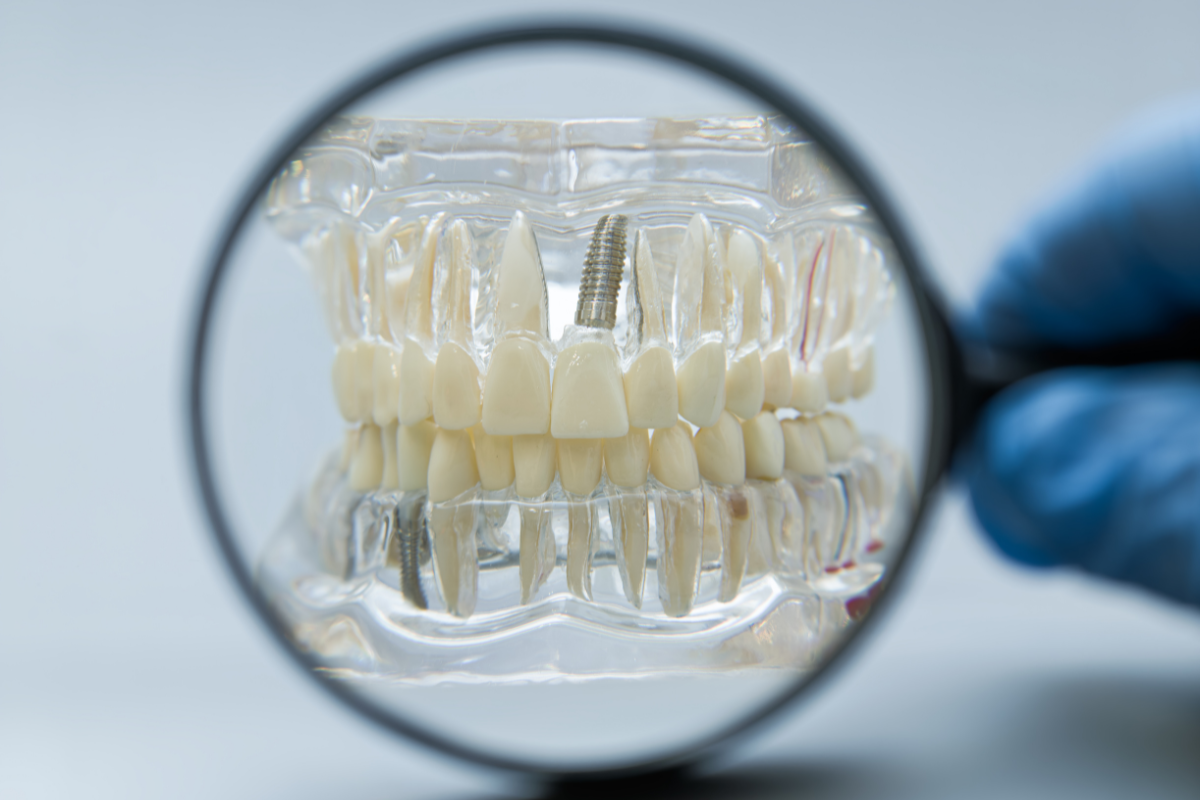
- How Dental Implants Halt the Aging Process Traditional tooth replacement options like removable dentures or traditional bridges fill the visible gap in your smile, but they do not stop facial aging. Because bridges sit on top of neighboring teeth and dentures rest on top of the gums, neither option replaces the missing tooth root underneath. Consequently, jawbone resorption continues unabated beneath traditional restorations. Dental implants are the only clinical tooth replacement solution capable of halting bone loss and preserving your facial structure for life. The Biological Magic of Titanium Posts: An implant consists of a biocompatible titanium post anchored directly into the jawbone, functioning as a synthetic tooth root. Through a biological process called osseointegration, your natural bone cells fuse tightly with the titanium surface.
- Restoring Mechanical Stimulation: Every time you bite or chew with an implant-supported crown, mechanical pressure is transferred directly into the jawbone—just like a natural tooth root.
- Reversing Bone Loss Signals: This chewing pressure signals your body to maintain blood flow and bone density, effectively stopping bone resorption in its tracks and keeping your facial scaffolding intact. Dental Implants vs. Traditional Options: Impact on Facial Structure
Structural Feature
Dental Implants
Traditional Dentures / Bridges
Replaces the Tooth Root?
Yes (Titanium post)
No (Floats on gums or anchors to adjacent teeth)
Halts Jawbone Resorption?
Yes (100% bone stimulation)
No (Bone continues to shrink underneath)
Preserves Natural Lip & Cheek Height?
Yes (Maintains full structural support)
No (Facial collapse can progress over time)
Prevents Sunken Lower Profile?
Yes (Keeps lower facial height intact)
No (Lower face shortens over years of wear)
Real-World Everyday Scenarios: Structural Restoration in Action
Scenario A: Replacing Missing Back Molars
Imagine having lost two back molars years ago. Because the gap is hidden in the back of your mouth, you didn't feel an immediate urgency to replace them. Over time, however, you notice your cheeks sinking inward and deep lines forming around your mouth. Placing permanent implants into those back molar spaces rebuilds lost bone density, restores your natural bite height, and pushes cheek tissues back into their youthful, natural contour.
Scenario B: Transitioning from Loose Dentures to Implant-Supported Bridges
You have worn traditional lower dentures for a decade, but over time, they have become loose, uncomfortable, and require messy adhesives because your lower jawbone has shrunk. Upgrading to implant-supported restorations securely anchors your bite into place, stimulates remaining jawbone density, and instantly restores proper vertical dimension to your lower face—giving your jawline a firmer, noticeably rejuvenated appearance.
Frequently Asked Questions About Implants and Facial Rejuvenation
Q1: Can dental implants reverse facial aging that has already occurred? A: Yes! While implants cannot erase skin wrinkles caused by sun exposure, restoring your missing teeth and lost bite height with implants acts like a natural, internal facelift. Rebuilding vertical height pushes the lips forward, smooths deep vertical marionette lines, and plumps hollow cheek contours. Q2: What if I have already experienced significant bone loss? A: If you have been missing teeth for years and have lost bone volume, you can still become a great candidate for implants! Modern procedures like bone grafting or sinus lifts allow your doctor to rebuild healthy, dense bone prior to implant placement, ensuring a solid, permanent foundation. Q3: Do dental implants feel and look natural? A: Completely. Because an implant is anchored into your jawbone like a natural tooth root and topped with a custom porcelain crown, it looks, feels, and functions identically to natural enamel. You can speak, laugh, and eat all your favorite foods without worrying about slipping or artificial appearance. Q4: Are dental implants only for older adults? A: Not at all. Tooth loss can affect adults of any age due to sports injuries, physical trauma, or congenital conditions. Placing implants in younger adults protects their facial scaffolding early on, preventing premature facial aging before it ever starts.
Reclaim Your Confidence and Youthful Profile at NoHo Dental Group
If you are dealing with missing teeth, loose restorations, or subtle changes to your facial profile, NoHo Dental Group is here to help you achieve a radiant smile and a strong biological foundation. Located centrally on Chandler Blvd, our modern practice serves families across North Hollywood, Valley Village, and Burbank with precision technology and compassionate care. Why San Fernando Valley Patients Trust Us:
- Comprehensive Multi-Specialty Services: From routine cleaning & exam visits, kids dentistry, and orthodontics to advanced root canal therapy, jaw pain & TMJ relief, sleep apnea appliances, custom tooth veneers, and permanent dental implants, we manage all your health needs under one roof.
- State-of-the-Art Digital Precision: We utilize 3D intraoral optical scanners, low-radiation digital x-rays, and high-definition intraoral cameras to assess your jawbone health and plan restorations with complete accuracy.
- Gentle, Stress-Free Atmosphere: We specialize in caring for anxious or nervous patients, providing gentle numbing techniques, relaxed communication, and a warm, judgment-free environment.
- Aesthetic & Restorative Excellence: Complement your structural restoration with clinical teeth whitening, clear aligner technology, or full smile makeovers tailored to your natural facial proportions. Protect your jawbone, revitalize your facial structure, and enjoy a lifetime of confident smiles. Contact our friendly North Hollywood team today to schedule your personalized implant consultation!
Contact Information
- Practice Name: NoHo Dental Group
- Phone Number: (747) 339-7016
- Address: 11126 Chandler Blvd, North Hollywood, CA 91601
- Website: nohodentalgroup.com